SUV · Ford
Ford Mustang Mach-E
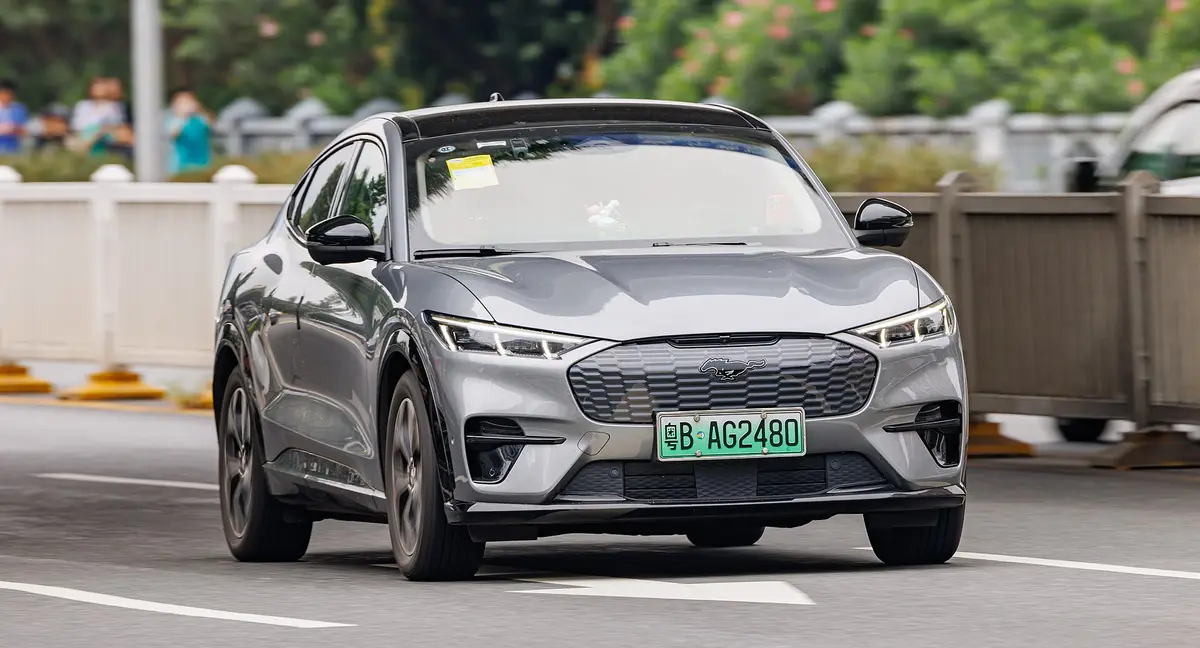
6 model years have enough public data for a page. EPA range across those years runs from 305 to 320 miles, depending on trim and year. NHTSA campaigns on years with a count sum to 42. Complaint filings on years with a count sum to 691. The sums are not rates, and a missing count is not a zero. A filing is not double-counted across years unless NHTSA itself filed it twice.
Model years
| Year | Longest EPA range | Best kWh/100 mi | Recalls | Complaints |
|---|---|---|---|---|
| 2021 | 305 | 33.3 | 13 | 353 |
| 2022 | 314 | 32.6 | 9 | 143 |
| 2023 | 312 | 32.7 | 6 | 130 |
| 2024 | 320 | 31.8 | 5 | 49 |
| 2025 | 320 | 30.7 | 7 | 14 |
| 2026 | 320 | 30.7 | 2 | 2 |
EPA file retrieved November 19, 2026. vehicles.csv. Complaint cells say n/a when the model-name match failed, which is not a count of zero.
Related
- Best and worst Mustang Mach-E years, by the counts
- Charging a used Ford Mustang Mach-E
- Compared with the Tesla Model Y
- Compared with the Hyundai Ioniq 5
- Compared with the Kia EV6
- Compared with the Volkswagen ID.4
- All Ford models
Mustang Mach-E: used buyer data, 2021 to 2026
Sourced numbers cite a public source with a link and an accessed date (2026-11-19), and totals we computed from NHTSA files (campaign counts, bulletin counts and per-year sums) are labeled as our counts. No price or fair-value figures appear here.
Shopping rank: number 4 of the used EV models in the ranking, with 3,138 US dealer listings (4.4% of used electric listings) on the Nov 7, 2026 snapshot (CarWhere, Most-listed used electric cars (US dealer listings), snapshot Nov 7, 2026, page updated Nov 14, 2026, accessed 2026-11-19). Cross-check: Cox Automotive data, as reported by MyEV, lists this model among the five best-selling used EVs of 2026 (MyEV, Nov 2026, accessed 2026-11-19).
Data identifiers used for lookups: NHTSA make FORD, model MUSTANG MACH-E (recall file spells it MUSTANG MACH E); fueleconomy.gov make Ford, model Mustang Mach-E.
1. Year-by-year changes that matter to a used buyer
Official EPA figures (fueleconomy.gov). One row per EPA record. Range is the EPA-rated range in miles, MPGe is combined, and charge time is hours on a 240 volt Level 2 charger as listed by fueleconomy.gov.
Source: fueleconomy.gov web services, queried 2026-11-19. Each row links to the fueleconomy.gov record.
| Model year | EPA record | EPA range (mi) | Combined MPGe | 240 V charge time (h) | Record |
|---|---|---|---|---|---|
| 2021 | Mustang Mach-E AWD | 211 | 93 | 8.5 | 43602 |
| 2021 | Mustang Mach-E AWD Extended | 270 | 90 | 10.7 | 43603 |
| 2021 | Mustang Mach-E GT | 270 | 84 | 10.3 | 44797 |
| 2021 | Mustang Mach-E GT Performance | 260 | 82 | 10.1 | 44798 |
| 2021 | Mustang Mach-E RWD | 230 | 100 | 8.8 | 43604 |
| 2021 | Mustang Mach-E RWD California Route 1 | 305 | 101 | 11.4 | 43683 |
| 2021 | Mustang Mach-E RWD Extended | 300 | 97 | 10.9 | 43605 |
| 2022 | Mustang Mach-E AWD | 224 | 93 | 8 | 45138 |
| 2022 | Mustang Mach-E AWD Extended | 277 | 91 | 10.7 | 45139 |
| 2022 | Mustang Mach-E CAL RT 1 ER AWD | 312 | 98 | 11.4 | 45140 |
| 2022 | Mustang Mach-E CAL RT 1 ER RWD | 314 | 101 | 10.1 | 45141 |
| 2022 | Mustang Mach-E GT | 270 | 84 | 10.3 | 45142 |
| 2022 | Mustang Mach-E GT Performance | 260 | 82 | 10.1 | 45143 |
| 2022 | Mustang Mach-E RWD | 247 | 103 | 8.1 | 45144 |
| 2022 | Mustang Mach-E RWD Extended | 303 | 97 | 10.9 | 45145 |
| 2023 | MUSTANG MACH-E CAL RT 1 ER AWD | 312 | 98 | 10.1 | 46514 |
| 2023 | Mustang Mach-E AWD | 224 | 93 | 8 | 46512 |
| 2023 | Mustang Mach-E AWD Extended | 290 | 92 | 10 | 46513 |
| 2023 | Mustang Mach-E GT | 270 | 84 | 10.3 | 46515 |
| 2023 | Mustang Mach-E GT Performance | 260 | 82 | 10.1 | 46516 |
| 2023 | Mustang Mach-E RWD | 247 | 103 | 8.1 | 46517 |
| 2023 | Mustang Mach-E RWD Extended | 310 | 99 | 10.2 | 46518 |
| 2023 | Mustang Mach-E RWD LFP | 250 | 101 | 7.4 | 46985 |
| 2024 | Mustang Mach-E AWD | 230 | 91 | 7.5 | 47824 |
| 2024 | Mustang Mach-E AWD Extended | 300 | 99 | 10 | 47825 |
| 2024 | Mustang Mach-E GT | 280 | 90 | 9.9 | 47826 |
| 2024 | Mustang Mach-E RWD | 250 | 102 | 7.1 | 47822 |
| 2024 | Mustang Mach-E RWD Extended | 320 | 106 | 10.1 | 47823 |
| 2024 | Mustang Mach-E Rally | 265 | 86 | 10.2 | 47827 |
| 2025 | Mustang Mach-E AWD | 240 | 100 | 7.7 | 49078 |
| 2025 | Mustang Mach-E AWD Extended | 300 | 104 | 10.2 | 49079 |
| 2025 | Mustang Mach-E GT | 280 | 90 | 9.9 | 49080 |
| 2025 | Mustang Mach-E RWD | 260 | 107 | 7.8 | 49082 |
| 2025 | Mustang Mach-E RWD Extended | 320 | 110 | 9.6 | 49083 |
| 2025 | Mustang Mach-E Rally | 265 | 86 | 10.2 | 49081 |
| 2026 | Mustang Mach-E AWD | 240 | 100 | 7.7 | 50200 |
| 2026 | Mustang Mach-E AWD Extended | 300 | 104 | 10.2 | 50201 |
| 2026 | Mustang Mach-E GT | 280 | 90 | 9.9 | 50202 |
| 2026 | Mustang Mach-E RWD | 260 | 107 | 7.8 | 50204 |
| 2026 | Mustang Mach-E RWD Extended | 320 | 110 | 9.6 | 50205 |
| 2026 | Mustang Mach-E Rally | 255 | 84 | 10 | 50203 |
The charge time shown is the EPA record's figure, and it depends on the onboard charger and test conditions. EPA range is a label figure for a new car, so a used car will show less as the battery ages. See the battery health guide for how to measure it.
Battery size, heat pump and charging port by model year. Third-party battery figures are usable or gross capacity as the page states it, and sources do not always agree. Entries marked "from a search extract" were read from search-result text, not the full page.
| Model year | Battery and changes | Heat pump (US) | Fast-charging port (US) |
|---|---|---|---|
| 2021 | Pack size is not shown. The figure was only in a search extract, and the full page was not confirmed. | No (Recurrent heat pump list, updated Nov 2026) | CCS1 (Ford sells a NACS adapter for its EVs; Ford support page) |
| 2022 to 2023 | Pack size is not shown. The figure was only in a search extract, and the full page was not confirmed. | No (Recurrent heat pump list, updated Nov 2026) | CCS1 |
| 2024 | Pack size is not shown. The figure was only in a search extract, and the full page was not confirmed. | No (Recurrent heat pump list, updated Nov 2026) | CCS1 |
| 2025 to 2026 | Pack size is not shown. The figure was only in a search extract, and the full page was not confirmed. | Yes, 2025 and later (Recurrent heat pump list, updated Nov 2026) | CCS1, with a NACS adapter available |
Heat pump source: Recurrent heat pump list, updated Nov 2026 (accessed 2026-11-19). Connector background: Joint Office, SAE J3400 connector (accessed 2026-11-19).
2. NHTSA recalls and complaints by model year
Query date: 2026-11-19 (Eastern time). Recalls: NHTSA recalls API, queried with the make, model and model year, trying every spelling NHTSA uses. Complaints: NHTSA complaints API, same method. The API matches model names exactly, so it misses some spellings. We cross-checked against NHTSA's public flat files for recalls and complaints (downloaded 2026-11-19), which cover the same NHTSA databases. The complaint counts and top components below come from the flat files because the API undercounts some years. The API count is shown beside them.
Read these counts with care. We tallied them from NHTSA data. NHTSA complaints are consumer reports, and NHTSA does not verify them. The counts are not adjusted for how many cars were sold in each year, and recent years have had less time to collect reports. The crash, fire, injury and death columns show what complainants reported.
| Model year | Recall campaigns (site snapshot) | Complaints (site snapshot) | Complaints (site snapshot again) | Reported crash | Reported fire | Reported injuries | Reported deaths | Top complaint components (complaints in each) |
|---|---|---|---|---|---|---|---|---|
| 2021 | 13 | 353 | 353 | 15 | 1 | 9 | 0 | ELECTRICAL SYSTEM (156), FORWARD COLLISION AVOIDANCE (106), POWER TRAIN (53) |
| 2022 | 9 | 143 | 143 | 13 | 0 | 3 | 0 | ELECTRICAL SYSTEM (79), POWER TRAIN (28), FORWARD COLLISION AVOIDANCE (23) |
| 2023 | 6 | 130 | 130 | 10 | 1 | 5 | 0 | ELECTRICAL SYSTEM (53), UNKNOWN OR OTHER (27), FORWARD COLLISION AVOIDANCE (26) |
| 2024 | 5 | 49 | 49 | 4 | 0 | 1 | 0 | ELECTRICAL SYSTEM (32), UNKNOWN OR OTHER (12), POWER TRAIN (9) |
| 2025 | 7 | 14 | 14 | 0 | 0 | 0 | 0 | ELECTRICAL SYSTEM (7), FORWARD COLLISION AVOIDANCE (4), SERVICE BRAKES (4) |
| 2026 | 2 | 2 | 2 | 0 | 0 | 0 | 0 | ELECTRICAL SYSTEM (2), EXTERIOR LIGHTING (1), SERVICE BRAKES (1) |
Complaint and recall counts in this table are the site snapshot, not a separate tally. A cell that says not shown has no usable count in that snapshot. That is not a count of zero.
API note: for 2023 to 2026 the complaints API returned no records under either spelling of the model name, while NHTSA's flat file lists complaints for those years. Use the flat-file column.
Model year 2027 records exist for some campaigns and complaints and are left out of the tables. Source for all counts above: NHTSA, accessed 2026-11-19.
Recall campaigns. Each campaign is listed once, with the model years of this model that it covers, per the NHTSA recalls API. "Units" is the campaign-wide figure from NHTSA's recall file. It often includes other models, so it is not a count for this model alone. "OTA" means the remedy is a software update, which the owner may have already received.
| Campaign | Received | Model years | Component | OTA | Advisory | Units (campaign-wide) | What NHTSA's summary says (shortened) |
|---|---|---|---|---|---|---|---|
| 21V140000 | 2021-03-05 | 2021 | SUSPENSION:SUBFRAME/MOUNTING BRACKET | no | none | 1,258 | The front subframe bolts may not have been tightened properly during assembly, which could result in loose bolts. |
| 21V711000 | 2021-09-14 | 2021 | VISIBILITY:WINDSHIELD | no | none | 17,692 | The windshield may not have been properly bonded to the vehicle, which could allow it to detach. As such, these vehicles fail to comply with the requirements of Federal Motor Vehicle Safety Standard number 212, "Windshield Mounting." |
| 21V712000 | 2021-09-14 | 2021 | VISIBILITY:FIXED PANARAMIC ROOF/SKY LIGHT ASSEMBLY | no | none | 13,544 | The vehicle's panoramic roof glass panel may not have been properly bonded to the vehicle, which could allow it to detach. |
| 21V979000 | 2021-12-16 | 2021 to 2022 | SEAT BELTS:REAR/OTHER:ANCHORAGE | no | none | 2,622 | The rear seat belt buckles may not be properly attached to the rear floor assembly. |
| 22V333000 | 2022-05-13 | 2021 | VEHICLE SPEED CONTROL | yes | none | 464 | The powertrain control module (PCM) functional safety software may fail to detect a software error, resulting in unintended acceleration, unintended deceleration, or a loss of drive power. |
| 22V412000 | 2022-06-10 | 2021 to 2022 | ELECTRICAL SYSTEM:PROPULSION SYSTEM:TRACTION BATTERY:MANAGEMENT SYSTEM | no | none | 48,924 | The high voltage battery main contactors may overheat. |
| 22V646000 | 2022-08-26 | 2022 | POWER TRAIN:AXLE ASSEMBLY:AXLE SHAFT | no | none | 1,175 | The right-rear axle half shafts may have been manufactured improperly, allowing the half shaft stem to break under load. |
| 23V687000 | 2023-10-13 | 2021 to 2022 | ELECTRICAL SYSTEM:PROPULSION SYSTEM:TRACTION BATTERY:MANAGEMENT SYSTEM | no | none | 34,762 | The high voltage battery main contactors may overheat. |
| 24V594000 | 2024-08-09 | 2023 to 2024 | VISIBILITY:WINDSHIELD WIPER/WASHER:MOTOR | no | none | 86,852 | The front windshield wiper motor may become inoperative, causing the wipers to fail. |
| 24V777000 | 2024-10-18 | 2021 | SERVICE BRAKES, HYDRAULIC:ANTILOCK/TRACTION CONTROL/ELECTRONIC LIMITED | no | none | 50 | An Over-The-Air (OTA) update to the Anti-lock Braking System (ABS) may result in a loss of power brake assist, ABS, Electronic Stability Control, Traction Control, and driver assistance features. |
| 25V130000 | 2025-03-01 | 2021 to 2022 | ELECTRICAL SYSTEM:PROPULSION SYSTEM:TRACTION BATTERY:MANAGEMENT SYSTEM | no | none | 626 | The high voltage battery main contactors may overheat. |
| 25V315000 | 2025-05-09 | 2021 to 2023 | BACK OVER PREVENTION:SOFTWARE | no | none | 1,076,138 | A software error may cause the rearview camera image to delay, freeze, or not display when the vehicle is in reverse. |
| 25V394000 | 2025-06-13 | 2025 | POWER TRAIN:AUTOMATIC TRANSMISSION:INTERNAL:PARK PAWL | no | none | 276 | The park rod may fail to engage when the vehicle is placed in the park (P) position. |
| 25V404000 | 2025-06-13 | 2021 to 2025 | ELECTRICAL SYSTEM:BODY CONTROL MODULE:SOFTWARE | no | none | 197,432 | In the event of a low battery charge, the electronic door latches may remain locked once the driver or front passenger exits and shuts the door, possibly trapping someone who is unable to use the inside door release handles, such as a child in the back seat. |
| 25V441000 | 2025-06-27 | 2022 | ELECTRICAL SYSTEM:PROPULSION SYSTEM:TRACTION BATTERY:MANAGEMENT SYSTEM | no | none | 239 | The high voltage battery main contactors may overheat. |
| 25V513000 | 2025-08-08 | 2021 | SERVICE BRAKES, HYDRAULIC:ANTILOCK/TRACTION CONTROL/ELECTRONIC LIMITED | no | none | 8 | An Over-The-Air (OTA) update to the Anti-lock Braking System (ABS) may result in a loss of power brake assist, ABS, Electronic Stability Control, Traction Control, and driver assistance features. |
| 25V519000 | 2025-08-09 | 2025 | EXTERIOR LIGHTING:LIGHTING CONTROL MODULE | no | none | 3,270 | The LED Driver Modules may contain a burnt diode, which can cause the low-beam and high-beam headlights, daytime running lights, front position lights, and front turn signals to fail in the affected headlight. |
| 25V863000 | 2025-12-12 | 2024 to 2026 | POWER TRAIN:AUTOMATIC TRANSMISSION:INTERNAL:PARK PAWL | no | none | 272,645 | The integrated park module may fail to lock into the park position when the driver shifts into park. |
| 25V885000 | 2025-12-18 | 2025 to 2026 | EXTERIOR LIGHTING:LIGHTING CONTROL MODULE | no | none | 45,047 | The Light Driver Control Module B (LDCMB) may fail, preventing the turn signals, daytime running lights, low beam, and high beam headlights from illuminating. |
| 26V417000 | 2026-06-30 | 2021 to 2023 | POWER TRAIN:DRIVELINE:DIFFERENTIAL UNIT | no | none | 42,784 | The rear differential pinion shaft may fracture. |
| 26V487000 | 2026-07-28 | 2023 to 2025 | STRUCTURE:EXTERIOR TRIM | no | none | 86,543 | The rear side quarter window glass trim may be improperly secured, which can allow it to detach. |
| 26V582000 | 2026-09-09 | 2023 to 2025 | ELECTRICAL SYSTEM:PROPULSION SYSTEM:TRACTION BATTERY:MANAGEMENT SYSTEM | no | none | 86 | The battery energy control module software may cause an incorrect state of charge to display in the vehicle, or lead to an increased risk of a high voltage battery fire after repeated DC Fast Charging cycles. |
We count 22 distinct campaigns. Source: NHTSA recalls API and recall flat file, accessed 2026-11-19. Check any specific car with its VIN at nhtsa.gov/recalls, since a campaign covers only certain builds.
3. Known issues by year, backed by a recall or bulletin
Only items with a campaign number or a manufacturer bulletin ID are listed. They show what the manufacturer or NHTSA documented, not how common a problem is.
Recall-backed (battery, charging, propulsion, electrical power and fire-risk campaigns).
- 2021: campaign 22V333000, 2022-05-13. The powertrain control module (PCM) functional safety software may fail to detect a software error, resulting in unintended acceleration, unintended deceleration, or a loss of drive power.
- 2021 to 2022: campaign 22V412000, 2022-06-10. The high voltage battery main contactors may overheat.
- 2022: campaign 22V646000, 2022-08-26. The right-rear axle half shafts may have been manufactured improperly, allowing the half shaft stem to break under load.
- 2021 to 2022: campaign 23V687000, 2023-10-13. The high voltage battery main contactors may overheat.
- 2021 to 2022: campaign 25V130000, 2025-03-01. The high voltage battery main contactors may overheat.
- 2025: campaign 25V394000, 2025-06-13. The park rod may fail to engage when the vehicle is placed in the park (P) position.
- 2021 to 2025: campaign 25V404000, 2025-06-13. In the event of a low battery charge, the electronic door latches may remain locked once the driver or front passenger exits and shuts the door, possibly trapping someone who is unable to use the inside door release handles, such as a child in the back seat.
- 2022: campaign 25V441000, 2025-06-27. The high voltage battery main contactors may overheat.
- 2024 to 2026: campaign 25V863000, 2025-12-12. The integrated park module may fail to lock into the park position when the driver shifts into park.
- 2021 to 2023: campaign 26V417000, 2026-06-30. The rear differential pinion shaft may fracture.
- 2023 to 2025: campaign 26V582000, 2026-09-09. The battery energy control module software may cause an incorrect state of charge to display in the vehicle, or lead to an increased risk of a high voltage battery fire after repeated DC Fast Charging cycles.
Manufacturer bulletin totals are not in the site snapshot, so no bulletin count is shown.
4. Test drive and inspection checklist
Start with the general steps in the kWhWise battery health guide, then add these model-specific checks.
- Run the VIN at NHTSA's recall lookup and get the dealer to show the completion record for every campaign that applies. Priority campaigns for this model: 22V333000, 22V412000, 22V646000, 23V687000, 25V130000, 25V394000, 25V404000, 25V441000, 25V863000, 26V417000, 26V582000.
- Spend extra test-drive time on the systems with the most NHTSA complaints across all years: Electrical System, Forward Collision Avoidance, Power Train (counts in the table in section 2). Complaint counts are not adjusted for sales and are unverified.
- Look for warning lights and messages at startup, during acceleration and after a DC fast-charge session. Ask the seller to show the last service record.
- Inspect the charging port, cable and any adapter. Check the car's port type against section 1 and ask whether the mobile cable and adapter are included.
- Plug in on a Level 2 charger. Confirm the car starts charging and holds a steady rate, and compare the charge time with the EPA record in section 1.
- 2021 to 2024 cars have no heat pump. Ask how the range held up in the last winter the car saw.
- Ask for proof that open recall campaigns were completed (see the recall table), particularly the ones tied to electrical and propulsion components.
- Electrical system is the top complaint component for this model in NHTSA's file. Ask for the service record and compare it with the TSB list in section 3.
- Note the outside temperature and compare the displayed full-charge range with the EPA range above. Ask for a battery state-of-health report (see the kWhWise battery health guide).
Sources: NHTSA recall and complaint data and EPA data as cited in sections 1 to 3, accessed 2026-11-19. Other items are inspection steps, not data claims.
5. Best and worst years
Verdict on reliability: the data does not separate the years. Complaint counts are raw, not adjusted for production volume, so a year with more complaints may simply have more cars on the road. NHTSA does not verify complaints. Recall counts depend on which build dates a campaign covers, and many campaigns span several years. No published reliability survey was used. So there is no best or worst year to name on reliability.
Where the documented facts do differ by year:
- 2025 is the first model year with a heat pump (Recurrent). 2021 to 2024 cars have none.
- Campaigns whose NHTSA summary mentions fire or a short circuit: 26V582000 (2023 to 2025, 2026-09-09). These tell a buyer to confirm the remedy was done on a given VIN, not that those years are worse overall.
Sources: as cited above, accessed 2026-11-19.